Chaos and thermalisation in many-body Floquet systems
4:30PM, 11 Nov 2026
Anton Kapustin derives the second law of thermodynamics from deterministic reversible dynamics and shows why the quantum case is harder.
The second law of thermodynamics says that an isolated system settles into the state of maximal entropy. It is the principle behind the arrow of time: eggs break and never unbreak. Yet the laws of motion are reversible and physicists have long argued over whether the Second Law can be deduced from them.
Vladimir Arnold’s cat map, which stretches a picture of a cat on a torus into ever thinner stripes, drives any smooth distribution to uniformity. But the map has only two degrees of freedom, and its quantum version reassembles the cat after finitely many steps.
In this colloquium, Prof. Anton Kapustin builds many-body versions of Arnold’s cat, classical and quantum. The key property is aperiodicity: no local quantity returns to itself, possibly displaced in space, after some time. For classical lattices, this implies the Second Law for many initial states, including Gibbs states. For quantum cat maps, thermalisation can also be proved, but the mechanism is more subtle.
Event information
This event takes place at 4:30pm on Wednesday 11 November in the Faraday seminar room of the London Institute for Mathematical Sciences, on the second floor of the Royal Institution. LIMS colloquia are sponsored by Cognia.
Speakers
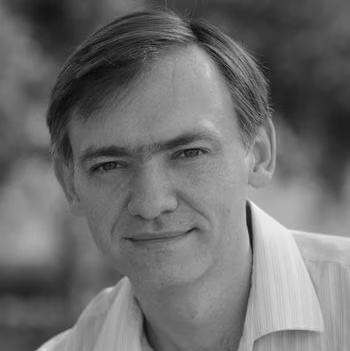
Anton Kapustin is the Earle C. Anthony Professor of Theoretical Physics at Caltech. His work spans quantum field theory, condensed matter and mathematics, including geometric Langlands, topological phases of matter and anomalies and the mathematical foundations of many-body physics.